The British Museum is one of the world’s most famous cultural institutions, attracting millions of visitors each year to its vast collections of art, history, and human civilization. Located in the heart of London, the museum houses artefacts spanning over two million years of history, including globally renowned objects such as the Rosetta Stone, the Parthenon Sculptures, and ancient Egyptian mummies.
One of the most remarkable aspects of the British Museum is its free general admission, making it accessible to visitors from all backgrounds. This commitment to public access allows anyone to explore some of the greatest achievements of human history without paying an entry fee. However, while entry is free, proper planning is still essential due to crowd levels, special exhibitions, and time management within the museum.
Why British Museum Admission Is Unique and Valuable
Free entry to world-class collections
Unlike many major museums around the world, the British Museum offers free admission to its permanent galleries. This means visitors can explore vast collections covering ancient Egypt, Greece, Rome, Africa, Asia, the Middle East, and the Americas without purchasing a ticket. Free entry encourages learning, curiosity, and repeat visits, allowing visitors to return multiple times to explore different sections at their own pace.
This open-access approach makes the British Museum particularly appealing for families, students, researchers, and travelers on a budget. The opportunity to see priceless artefacts without cost is one of the museum’s greatest strengths and a major reason it remains one of the most visited museums globally.
Educational depth and global perspective
Admission to the British Museum offers more than visual displays—it provides context, storytelling, and education. The museum’s galleries are carefully curated to explain how civilizations developed, interacted, and influenced one another across time. Informational panels, interactive displays, and guided tours help visitors understand the significance of each artefact.
For those interested in history, archaeology, art, and culture, the British Museum serves as a global classroom. Admission allows visitors to move freely between continents and centuries, gaining insight into humanity’s shared heritage.
Iconic architecture and visitor experience
Beyond its collections, the British Museum itself is an architectural landmark. The Great Court, with its stunning glass roof, creates a bright and welcoming central space that enhances the visitor experience. Admission gives access to this impressive structure as well as reading rooms, galleries, and public spaces designed to support exploration and learning.
The museum’s layout encourages discovery, with major highlights and quieter galleries offering a balanced experience for both first-time visitors and returning guests.
How British Museum Admission Works
General admission and booking
General admission to the British Museum is free, and visitors can enter without purchasing a ticket. However, the museum strongly encourages visitors to book a free timed-entry ticket online, especially during busy periods. Timed entry helps manage crowd flow and reduces waiting times at the entrance.
Walk-in entry is sometimes available, but availability depends on capacity and demand. Visitors who book in advance usually experience smoother access and shorter queues.
Opening times and best visiting periods
The British Museum is typically open daily, with standard opening hours from morning to early evening. On certain days, late openings may be available, allowing visitors to explore after typical daytime crowds have thinned.
Early mornings and weekday visits are generally the best times to avoid heavy crowds. Weekends, school holidays, and tourist seasons tend to be busier, particularly around popular exhibits.
Special exhibitions and paid tickets
While permanent galleries are free, temporary exhibitions often require a paid ticket. These exhibitions usually focus on specific themes, cultures, or historical periods and offer deeper insight through curated displays and rare objects.
Visitors interested in special exhibitions should book tickets in advance, as these events can sell out quickly due to limited capacity.
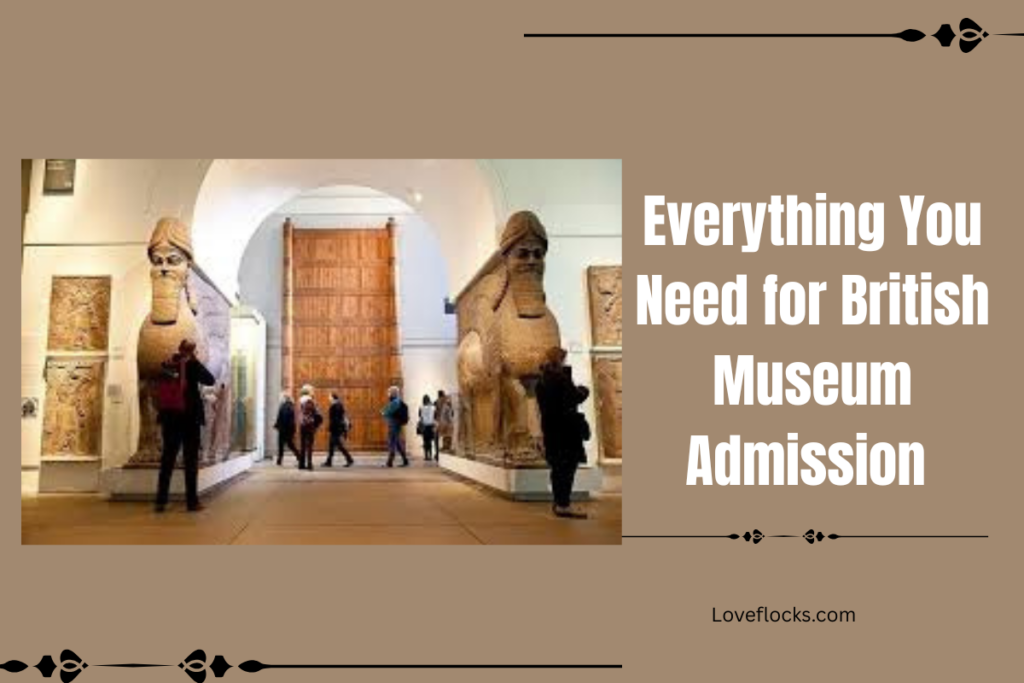
British Museum Admission & Visit Tips, [current_date]
1. Book a free timed-entry ticket online
Although general admission is free, booking a time slot in advance helps you avoid queues and ensures smoother entry.
2. Visit early in the day
Morning visits are usually quieter, making it easier to explore popular galleries without heavy crowds.
3. Prioritize key galleries
The museum is vast, so decide in advance which sections you want to see, such as Egypt, Greece, or the Middle East.
4. Allow several hours for your visit
Exploring the British Museum properly can take three to four hours or more, depending on your interests.
5. Use a museum map or digital guide
Maps and digital guides help you navigate efficiently and prevent you from missing important exhibits.
6. Consider guided tours or audio guides
Guided tours provide expert explanations that add depth and historical context to what you are seeing.
7. Take advantage of free galleries
Return visits are encouraged since admission is free, allowing you to explore the museum in stages.
8. Plan breaks during your visit
The museum is large, so plan time to rest, eat, or relax in designated seating and café areas.
9. Be mindful of peak seasons
School holidays and summer months attract more visitors, so expect larger crowds during these times.
10. Check rules on bags and photography
Security checks apply, and photography rules may vary by gallery, so always follow posted guidelines.
11. Arrive at least 15 minutes before your time slot
Even with free timed-entry tickets, arriving early helps you clear security smoothly and start your visit stress-free.
12. Understand that entry is free, but capacity is limited
During busy periods, walk-in entry may pause when capacity is reached, making advance booking essential.
13. Start with the most popular exhibits
Visit highlights like the Rosetta Stone and Egyptian galleries early before crowds build around them.
14. Use quieter side galleries to pace your visit
Less-visited galleries offer calm spaces to rest and still enjoy world-class artifacts.
15. Plan your visit by region or theme
Focusing on one or two regions helps prevent museum fatigue and allows deeper engagement.
16. Check gallery closure notices
Some rooms may close temporarily for conservation or events, so review notices before planning your route.
17. Take advantage of free talks and lectures
Short talks led by experts add valuable insight and are included with free admission.
18. Avoid large bags if possible
Large bags may need to be checked, which can slow entry and exit.
19. Visit during weekday afternoons
Midweek afternoons are often quieter than mornings, weekends, or holidays.
20. Plan meal times strategically
Eating before or after peak lunch hours helps avoid café queues and saves time.
21. Bring a notebook or phone for notes
The museum is information-rich, and jotting down highlights enhances learning and reflection.
22. Supervise children closely in busy galleries
Popular exhibits can become crowded, making supervision important for safety and comfort.
23. Use seating areas to recharge
Strategically placed benches allow visitors to rest without leaving the galleries.
24. Visit special exhibitions only if time allows
Paid exhibitions are immersive but can consume significant time—prioritize wisely.
25. Respect photography guidelines
Flash photography and filming may be restricted in certain galleries to protect artifacts.
26. Keep personal belongings secure
Busy public spaces require awareness of bags, phones, and valuables.
27. Plan a second visit if possible
The museum is too large to absorb in one day, and free admission makes return visits easy.
28. Explore the Great Court thoughtfully
This central space offers orientation, exhibitions, and a moment to pause before continuing.
29. Check closing times carefully
Last entry may be earlier than closing, and galleries begin clearing before final hours.
30. End your visit calmly
Finish in a quieter gallery or shop to reflect on the experience without rushing.
Official British Museum admission & ticket links
Official British Museum visit page — timed entry (free general admission):
https://www.britishmuseum.org/visit/plan-your-visit/visit (book entry) British Museum
Official contact & FAQs (questions about entry, accessibility, and guidelines):
https://www.britishmuseum.org/about-us/contact-us British Museum
Summary
British Museum admission stands out for its accessibility, educational depth, and global significance. With free entry to one of the world’s most extensive collections, visitors gain unparalleled access to artefacts that span continents and millennia. This open approach makes the museum a cornerstone of cultural learning and discovery in London.
While admission is free, thoughtful planning enhances the experience. Booking a timed-entry slot, choosing quieter visiting hours, and prioritising key galleries can transform a potentially overwhelming visit into an engaging and memorable journey through history. Understanding the difference between free permanent galleries and paid special exhibitions also helps visitors plan effectively.
Whether you are a first-time visitor, a returning guest, or a lifelong learner, the British Museum offers an extraordinary opportunity to explore human history in one place. With smart preparation and a clear admission strategy, your visit can be both enriching and unforgettable.
From the iconic Rosetta Stone and Parthenon Sculptures to family-friendly trails and Friday evening openings, the museum offers something for everyone—and with the tips above, you’ll be prepared to explore it like a pro. Whether you’re visiting London for the first time or returning to uncover more treasures, this guide will help you make the most of one of the world’s greatest museums.