Marriage is a beautiful union, but it is also one of the most emotionally demanding relationships a person can experience. When two individuals with different backgrounds, communication styles, expectations, and emotional needs come together, misunderstandings are bound to happen. Over time, unresolved conflicts can quietly erode love, trust, and intimacy between husband and wife.
In today’s world, where stress, finances, parenting pressures, and emotional burnout are common, marriage counselling provides a safe, neutral space for couples to reconnect, heal wounds, and learn healthier ways to communicate. Whether a marriage is struggling or simply seeking growth, counselling offers tools that can transform the relationship from the inside out.
Why Counselling for Husband and Wife Is Important
1. It Improves Communication Between Spouses
One of the biggest reasons couples seek counselling is poor communication. Many husbands and wives love each other deeply but struggle to express feelings without arguing, shutting down, or feeling misunderstood. Counselling helps couples learn how to speak honestly without blame and listen without defensiveness.
Through guided sessions, couples begin to understand each other’s emotional language. What once sounded like criticism may actually be a cry for connection. Counselling teaches practical communication tools that replace shouting, silence, or passive aggression with clarity, empathy, and respect.
Over time, improved communication reduces unnecessary conflict and builds emotional safety in the marriage.
2. It Helps Resolve Ongoing Conflict
Every marriage experiences conflict, but unresolved conflict can become toxic. Arguments that repeat without resolution often point to deeper emotional wounds, unmet needs, or unspoken fears. Counselling helps uncover what is really happening beneath the surface.
A trained counsellor helps husband and wife slow down emotionally charged conversations and identify unhealthy patterns. Instead of “winning” arguments, couples learn how to solve problems together.
This process doesn’t erase disagreements, but it equips couples with tools to manage conflict in ways that strengthen—not damage—the relationship.
3. It Rebuilds Trust After Hurt or Betrayal
Trust is fragile, and when it is broken—through infidelity, dishonesty, neglect, or emotional withdrawal—it can feel impossible to restore. Counselling provides a structured environment for healing where both partners can express pain, responsibility, and remorse without fear.
Marriage counselling does not rush forgiveness. Instead, it focuses on accountability, emotional repair, and consistent actions that rebuild safety over time. For many couples, counselling becomes the bridge between deep hurt and renewed commitment.
Healing trust is a process, and counselling helps couples walk that journey together with guidance and hope.
4. It Strengthens Emotional and Physical Intimacy
Emotional distance often leads to physical distance. When resentment, stress, or unresolved conflict builds up, intimacy naturally suffers. Counselling helps couples reconnect emotionally, which often restores physical closeness as well.
By addressing emotional needs, love languages, and attachment styles, counselling helps husbands and wives feel seen, valued, and desired again. Intimacy becomes less about obligation and more about connection.
Many couples discover that counselling doesn’t just fix problems—it deepens love in ways they never expected.
How Counselling for Husband and Wife Works
1. Creating a Safe and Neutral Space
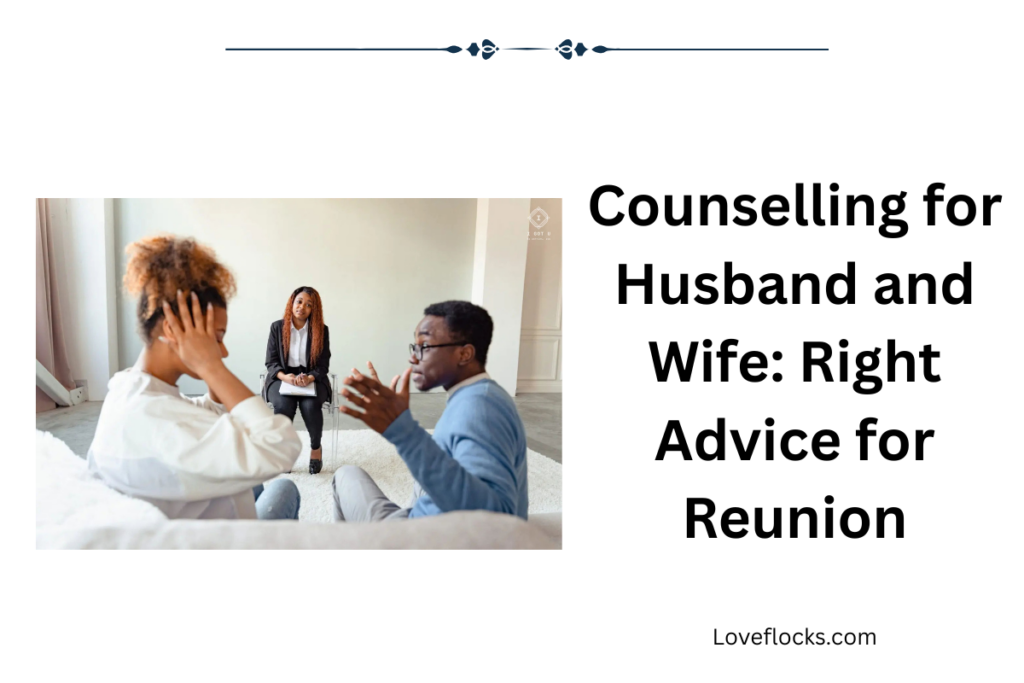
Marriage counselling begins by creating a safe environment where both partners feel heard and respected. The counsellor does not take sides but helps each spouse express thoughts and emotions clearly and honestly.
This neutrality allows difficult conversations to happen without escalating into arguments. For many couples, this is the first time they feel truly listened to without judgement.
Safety is the foundation of healing, and counselling prioritizes it from the start.
2. Identifying Unhealthy Patterns
Most marital issues are not about one single event but about repeated patterns—how couples argue, withdraw, blame, or avoid. Counselling helps couples recognize these cycles and understand how they contribute to emotional distance.
Once patterns are identified, couples can begin replacing them with healthier responses. Awareness brings choice, and choice brings change.
Breaking unhealthy patterns is one of the most powerful outcomes of marriage counselling.
3. Learning Practical Relationship Skills
Counselling is not just about talking—it is about learning. Couples are taught skills such as emotional regulation, active listening, boundary setting, and conflict resolution.
These tools are practical and applicable to daily life. They empower couples to handle future challenges without falling back into old habits.
Healthy marriages are built on learned skills, not just good intentions.
4. Setting Shared Goals for the Marriage
Counselling helps husband and wife clarify what they want their marriage to look like moving forward. This includes emotional goals, family values, financial alignment, and long-term vision.
When couples reconnect around shared goals, they stop seeing each other as opponents and start working as a team again.
A shared vision strengthens commitment and renews hope for the future.
When Should a Husband and Wife Seek Counselling?
Frequent arguments or constant tension
Emotional distance or lack of intimacy
Trust issues or past betrayal
Communication breakdown
Parenting disagreements
Financial stress affecting the marriage
Feeling stuck, unhappy, or disconnected
Counselling is most effective when couples seek help early, but it can still bring healing even after years of struggle.
Benefits of Counselling for Husband and Wife
Better communication and emotional understanding
Healthier conflict resolution
Stronger trust and intimacy
Reduced resentment and stress
Renewed commitment and partnership
Personal growth for both spouses
Marriage counselling benefits not only the relationship but also the emotional well-being of each partner.
30 counselling tips for Perfect Reunion, [current_date]
1. Listening with intention
True listening in marriage means seeking to understand your spouse’s heart, not preparing a response while they speak.
2. Speaking with kindness
Words spoken gently carry healing, even when the message is difficult or uncomfortable.
3. Pausing before reacting
A short pause during conflict prevents emotional reactions from turning into lasting wounds.
4. Addressing issues early
Small unresolved concerns grow into deep resentment when ignored for too long.
5. Choosing connection over winning
Winning arguments may satisfy pride, but choosing connection preserves love.
6. Respecting differences
Differences in personality and perspective bring balance when met with respect instead of resistance.
7. Taking responsibility
Healing begins when each spouse owns their actions without shifting blame.
8. Creating emotional safety
A safe emotional environment allows honesty, vulnerability, and trust to grow.
9. Managing tone and attitude
The tone of your voice often communicates more than the words you choose.
10. Apologizing sincerely
A sincere apology opens the door to healing when it comes without excuses.
11. Practicing forgiveness daily
Forgiveness is a daily choice that frees both the giver and the receiver.
12. Setting healthy boundaries
Boundaries protect respect and prevent emotional exhaustion in marriage.
13. Making time for connection
Intentional time together keeps love alive beyond responsibilities and routines.
14. Avoiding outside interference
Some marital matters heal best when handled privately and respectfully.
15. Expressing needs clearly
Clear communication prevents frustration caused by unspoken expectations.
16. Assuming good intentions
Believing the best about your spouse softens reactions and reduces conflict.
17. Learning emotional language
Understanding how your spouse feels loved deepens emotional connection.
18. Releasing the past
Constantly revisiting past mistakes blocks progress and healing.
19. Solving problems together
Marriage grows stronger when spouses face challenges as a team.
20. Practicing patience
Change takes time, and patience allows growth without pressure.
21. Validating emotions
Feeling understood often matters more than being corrected.
22. Adjusting expectations
Healthy expectations reduce disappointment and increase peace.
23. Choosing curiosity over criticism
Curiosity invites understanding, while criticism shuts it down.
24. Rebuilding trust consistently
Trust is restored through repeated honest actions, not words alone.
25. Practicing humility
Humility reconnects hearts where pride creates distance.
26. Resting before tough conversations
Well-rested minds communicate more calmly and clearly.
27. Celebrating progress
Growth should be celebrated, even when perfection is not achieved.
28. Seeking counselling early
Early guidance prevents small issues from becoming deep wounds.
29. Growing intentionally together
Marriage thrives when both partners commit to learning and growth.
30. Remembering your why
Revisiting why you chose each other renews love and commitment.
Conclusion
Marriage counselling is not about proving who is right or wrong; it is about rediscovering how to walk together with understanding, patience, and intentional love. Every piece of advice shared above points back to one central truth: healthy marriages are built, not assumed. Love does not fade because couples stop caring—it weakens when communication breaks down, emotional safety is lost, and unresolved issues are left unattended. Counselling provides the guidance needed to rebuild what daily life, stress, and silence may have slowly worn away.
When husband and wife choose to apply these counselling principles, they create space for healing conversations, renewed trust, and deeper emotional connection. Listening becomes more compassionate, conflict becomes less destructive, and differences become opportunities for growth rather than division. Over time, small intentional changes—gentler words, sincere apologies, patient understanding—begin to transform the entire tone of the relationship. What once felt heavy starts to feel hopeful again.
Most importantly, counselling reminds couples that they are not opponents but partners. It helps them face challenges side by side, with humility and grace, instead of turning against each other. Whether a marriage is struggling deeply or simply seeking growth, counselling offers wisdom, clarity, and practical tools to strengthen the bond. When love is nurtured with intention, guided by understanding, and supported by wise counsel, marriage does not just survive—it flourishes.