Meditation is one of the simplest yet most powerful practices for improving mental clarity, emotional balance, and overall well-being. In a fast-paced world filled with constant noise, distractions, and pressure, meditation offers a way to pause, breathe, and reconnect with the present moment. It is not about emptying the mind or achieving perfection—it is about learning to observe thoughts without judgement and cultivating inner calm.
Many people assume meditation is complicated or reserved for monks and spiritual experts, but in reality, meditation is accessible to anyone. Whether practised for one minute or one hour, meditation helps train the mind to become more aware, focused, and resilient. Over time, it reduces stress, improves emotional regulation, and enhances self-awareness.
Understanding What Meditation Really Is
Meditation is the practice of directing attention intentionally, often toward the breath, a sensation, a word, or the present moment. It teaches the mind to settle rather than constantly react. Contrary to popular belief, meditation does not eliminate thoughts; instead, it changes your relationship with them.
During meditation, thoughts will arise—that is natural. The goal is not to stop thinking but to notice when the mind wanders and gently bring attention back to the chosen focus. This process strengthens awareness and trains mental discipline over time.
Meditation also helps create space between thoughts and emotions. With practice, you become less controlled by impulsive reactions and more capable of responding thoughtfully. This increased awareness improves decision-making, emotional balance, and mental clarity in daily life.
Preparing for Meditation
Creating the right environment helps establish a consistent meditation habit. Choose a quiet space where you can sit comfortably without interruption. You do not need special equipment—just a calm setting and a willingness to be present.
Posture is important, but should remain relaxed. Sit upright in a chair or on the floor with your back straight, shoulders relaxed, and hands resting comfortably. Physical comfort helps prevent distraction and supports longer practice.
Equally important is mindset. Meditation is not about performance or results. Approach it with patience and curiosity. Some days will feel peaceful, others restless—but both are part of the process. Consistency matters more than how “good” a session feels.
Common Meditation Challenges and How to Handle Them
Many beginners feel frustrated by constant thoughts. This is normal. Meditation is not about silencing the mind but practicing awareness. Each time you return attention to the breath, you strengthen mindfulness.
Restlessness and discomfort may also arise. Adjust posture gently if needed and observe sensations without reacting immediately. Over time, physical and mental discomfort decreases as the body adapts.
Inconsistency is another common challenge. Rather than aiming for long sessions, focus on daily practice. Even one minute of meditation builds habit strength and long-term benefits.
Benefits of Regular Meditation
Consistent meditation reduces stress by calming the nervous system and lowering mental reactivity. It improves focus by strengthening attention control and reducing mental clutter.
Emotionally, meditation enhances self-awareness and emotional regulation. It helps individuals respond calmly rather than react impulsively. Over time, it cultivates patience, compassion, and emotional resilience.
Physically, meditation can improve sleep quality, reduce tension, and promote overall well-being. These benefits accumulate gradually, reinforcing the importance of regular practice.
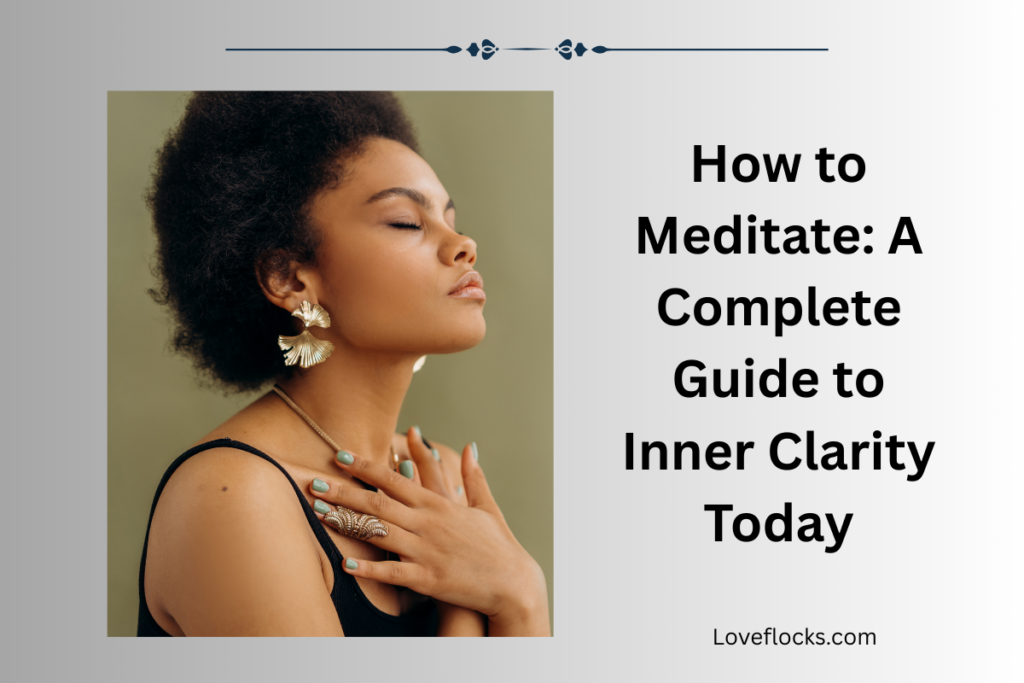
20 Step-by-Step Guide on How to Meditate, [current_date]
20-step guide on how to meditate, presented strictly in Loveflock’s way, with deep explanations for each step and clear progression for beginners and regular practitioners.
1. Set a clear intention
Meditation begins with knowing why you are showing up.
Before you sit down, gently clarify your intention. This could be to find calm, reduce stress, gain clarity, or simply be present. An intention gives your practice direction and meaning, anchoring your mind when distractions arise. When your purpose is clear, meditation becomes a conscious choice rather than a vague habit.
2. Choose a quiet and safe space
A calm environment supports a calm mind.
Select a space where interruptions are minimal. Silence is helpful, but not required—what matters most is feeling safe and undisturbed. Over time, returning to the same place conditions your mind to relax more quickly, making meditation easier and deeper.
3. Sit in a comfortable position
Comfort allows the mind to settle without distraction.
Sit upright on a chair or cushion with your spine naturally straight. Relax your shoulders and rest your hands comfortably. Avoid tension or stiffness. A balanced posture supports alertness while preventing physical discomfort from dominating your attention.
4. Gently close your eyes
Closing the eyes turns attention inward.
Closing your eyes helps reduce visual stimulation and encourages internal awareness. If closing your eyes feels uncomfortable, soften your gaze instead. The goal is to minimize external distractions while remaining relaxed and present.
5. Take a few deep grounding breaths
Breath is the bridge between body and mind.
Begin with slow, deep breaths to signal safety to your nervous system. Inhale fully, then exhale gently. This initial breathing prepares your body to relax and helps transition from daily activity into stillness.
6. Allow breathing to return to normal
Natural breath creates natural awareness.
After grounding breaths, let your breathing flow naturally. Do not control it. Simply observe its rhythm. This teaches acceptance and helps cultivate a non-judgmental awareness of the present moment.
7. Focus attention on the breath
The breath anchors the wandering mind.
Choose a specific point of focus—such as the sensation of air at the nostrils or the rise and fall of the chest. This focal point becomes your home base, gently guiding attention whenever the mind drifts.
8. Notice when the mind wanders
Awareness begins with noticing, not controlling.
Thoughts will arise—this is natural. The practice is not to stop thinking but to notice when attention has wandered. Awareness itself is success. Each noticing strengthens mindfulness.
9. Return to the breath without judgement.
Gentleness sustains meditation better than force.
When the mind wanders, calmly guide it back to the breath without frustration. Avoid self-criticism. Each return builds patience, discipline, and compassion toward yourself.
10. Observe thoughts without engaging
Thoughts lose power when they are simply observed.
Allow thoughts to come and go like passing clouds. Do not analyse or follow them. This creates space between awareness and reaction, reducing emotional reactivity over time.
11. Acknowledge emotions gently
Emotions soften when met with awareness.
If emotions arise, notice them without labelling them as good or bad. Allow their presence while returning attention to the breath. This practice builds emotional regulation and self-acceptance.
12. Notice physical sensations
The body speaks when the mind listens.
Observe sensations such as warmth, tension, or tingling without reacting. This deepens mind-body awareness and helps release stored tension naturally.
13. Maintain relaxed alertness
Meditation balances calm with clarity.
Stay awake and present without forcing concentration. Relaxed alertness prevents drowsiness while maintaining gentle focus. This balance strengthens mindfulness and mental clarity.
14. Use a timer instead of checking time
Let go of time to stay present.
Set a timer before starting to avoid distraction. This frees the mind from anticipating the end and allows deeper immersion in the practice.
15. Start with short sessions
Consistency matters more than duration.
Begin with 5–10 minutes. Short sessions build habit and confidence. As comfort grows, gradually increase the duration without pressure.
16. End the session gradually
Transitions preserve mindfulness.
Before opening your eyes, take a moment to notice how you feel. Slowly reorient to your surroundings. This gentle transition helps carry calm awareness into daily life.
17. Reflect briefly after meditation
Reflection deepens understanding.
Notice changes in mood, clarity, or tension. Reflection reinforces awareness and helps track subtle benefits over time without judgment.
18. Practice at the same time daily
Routine strengthens commitment.
Meditating at the same time each day builds consistency and conditions the mind to settle more easily. Habit transforms meditation into a natural rhythm.
19. Be patient with progress
Growth unfolds quietly through repetition.
Meditation benefits accumulate gradually. Avoid measuring progress by how calm you feel. Trust the process and allow growth to happen naturally.
20. Carry mindfulness into daily life
Meditation continues beyond the cushion.
Apply awareness to everyday activities—breathing, walking, listening. When mindfulness becomes a way of living, meditation transforms from a practice into a mindset.