Leg curls are one of the most effective exercises for targeting the hamstrings, the muscles located at the back of your thighs. While many people focus on squats and lunges for lower-body strength, neglecting hamstrings can create muscle imbalances that affect posture, joint stability, and overall performance. The hamstrings are responsible for knee flexion, hip extension, and explosive movements, making them essential for athletes, fitness enthusiasts, and anyone looking to maintain mobility and strength.
Strong hamstrings protect the knees by balancing the often stronger quadriceps, reducing the risk of strains, ligament injuries, or tendon damage. Moreover, well-developed hamstrings improve athletic abilities such as sprinting, jumping, and agility, while also enhancing aesthetics by giving the legs a well-rounded, sculpted appearance.
Leg curls, when performed correctly, isolate the hamstrings and allow for focused muscle engagement. Unlike compound exercises like deadlifts or squats, which involve multiple muscles, leg curls provide direct tension on the hamstrings throughout the range of motion. This targeted approach promotes muscle growth, strengthens connective tissue, and supports overall lower-body function.
Anatomy of the Hamstrings and Their Function
The hamstrings consist of three primary muscles:
Biceps Femoris – Responsible for knee flexion and hip extension.
Semitendinosus – Assists in bending the knee and extending the hip, contributing to overall thigh stability.
Semimembranosus – Works with the other two muscles to provide knee flexion, hip extension, and control during movements like walking and running.
The hamstrings play a key role in balancing the quadriceps, protecting the knee, and ensuring proper biomechanics during running, jumping, and lifting activities. They also support the glutes in hip extension, which is essential for posture and explosive movements. Weak hamstrings can contribute to lower-back strain, reduced athletic performance, and increased risk of injuries.
Leg curls allow you to train these muscles effectively in isolation, ensuring proper activation and strengthening of each part of the hamstring group.
Different Variations of Leg Curls and Their Unique Benefits
Leg curls can be performed using machines, cables, or resistance bands, each offering unique benefits:
Seated Leg Curl – Stretches the hamstrings fully and strengthens them in a lengthened position, which reduces the risk of strain during sports or dynamic movements.
Lying Leg Curl – Targets the hamstrings in a shortened position, emphasizing peak contraction and improving muscle tone.
Standing Leg Curl – Often unilateral, helping correct imbalances between left and right legs while isolating the hamstrings.
Cable or Resistance Band Leg Curl – Provides versatility for home workouts, accommodating different levels of resistance and range of motion.
Choosing the right variation depends on your goals. For strength and injury prevention, a combination of seated and lying leg curls is ideal. Athletes seeking explosive power may benefit from standing curls or resistance-based variations. Incorporating multiple types ensures full hamstring development and balanced lower-body performance.
Proper Form and Technique for Maximum Hamstring Activation
Proper form is critical for preventing injury and maximizing results:
Adjust the machine – Align your knees with the pivot point of the machine to ensure smooth motion.
Keep hips and thighs stationary – Avoid lifting the hips or moving your upper body, which reduces hamstring engagement.
Control the motion – Curl the legs slowly toward your glutes and lower them slowly back down. Avoid jerking or swinging.
Maintain a full range of motion – Ensure hamstrings are fully stretched at the start and fully contracted at the top.
Focus on muscle activation – Concentrate on using the hamstrings, not momentum, to move the weight.
Beginners should start with lighter weights to perfect technique before progressing to heavier loads. Experienced lifters can adjust reps, sets, and tempo to maximize strength and hypertrophy.
Benefits of Incorporating Leg Curls Into Your Routine
Hamstring Strength and Size – Leg curls isolate and strengthen hamstrings, contributing to muscular balance and aesthetics.
Injury Prevention – Strong hamstrings protect the knees, reduce ACL strain, and prevent hamstring pulls or tears.
Enhanced Athletic Performance – Improved sprinting, jumping, and agility due to stronger posterior muscles.
Postural Support – Strong hamstrings assist glutes and lower back, improving posture and stability.
Balanced Lower Body – Targeted training corrects imbalances between quadriceps and hamstrings for better functional movement.
Common Mistakes to Avoid
Using too much weight, compromising form.
Jerking or swinging the legs instead of a controlled motion.
Hyperextending the knees during the lowering phase.
Neglecting to warm up or stretch before performing leg curls.
Focusing only on one variation limits full hamstring development.
Correcting these mistakes ensures optimal results, prevents injury, and maximizes muscle engagement.
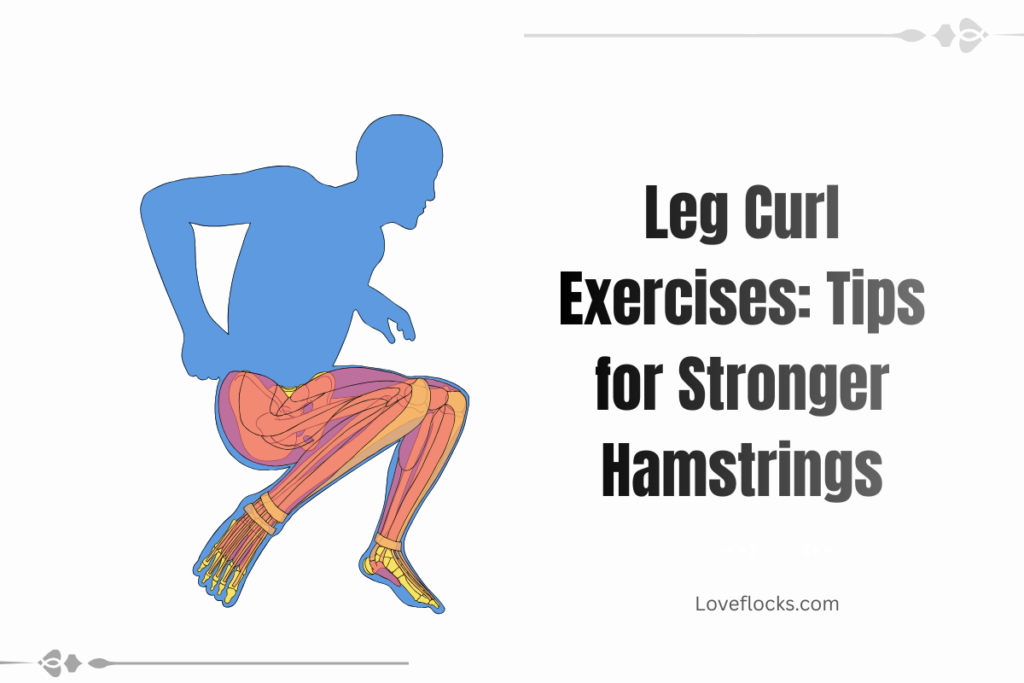
20 Tips for Leg Curl Exercises, [current_date]
1. Always warm up before starting
Dynamic stretches or light cardio prepare hamstrings for exercise and prevent strains.
2. Adjust the machine properly
Knee alignment with the pivot point ensures effective and safe movement.
3. Start with light weights
Perfect form before increasing resistance to reduce injury risk.
4. Maintain slow, controlled reps
Focus on muscle contraction rather than speed or momentum.
5. Keep hips and thighs stationary
Prevents cheating and ensures maximum hamstring engagement.
6. Breathe consistently
Inhale during lowering, exhale while curling for better core stability.
7. Include multiple leg curl variations
Seated, lying, and standing curls target hamstrings at different angles.
8. Perform unilateral exercises
Correct imbalances between left and right hamstrings.
9. Stretch after your workout
Maintains flexibility, reduces soreness, and prevents tightness.
10. Track your progress
Monitor weights, reps, and sets to ensure continuous improvement.
11. Focus on full range of motion
Fully stretch and contract hamstrings for optimal growth.
12. Pair with compound exercises
Squats, deadlifts, and lunges complement leg curls for balanced legs.
13. Avoid overtraining
Hamstrings need recovery; train them 1–2 times per week effectively.
14. Focus on mind-muscle connection
Consciously contract hamstrings to improve activation and results.
15. Rest between sets appropriately
30–60 seconds allows recovery while keeping muscles engaged.
16. Maintain consistent tempo
1–2 seconds up, 2–3 seconds down maximizes tension on muscles.
17. Avoid locking knees
Prevents joint strain and keeps tension on the hamstrings.
18. Pair with glute exercises
Strong glutes enhance hip extension and overall posterior chain strength.
19. Adjust reps and sets for goals
Strength: 4–6 reps, Hypertrophy: 10–15 reps, Endurance: 15–20 reps.
20. Listen to your body
Stop if pain occurs beyond normal exertion; check form or reduce weight.
Conclusion: Maximizing Hamstring Strength and Lower-Body Health with Leg Curls
Leg curls are far more than just an isolation exercise—they are a critical component of any comprehensive lower-body training program. By specifically targeting the hamstrings, leg curls help create balanced leg development, improve athletic performance, and reduce the risk of injuries. Many people focus primarily on squats, lunges, or leg presses, neglecting the hamstrings, which can lead to muscle imbalances, poor posture, and knee instability. Incorporating leg curls ensures that the posterior chain—the hamstrings, glutes, and lower back—remains strong, flexible, and functional, supporting both aesthetic goals and functional fitness.
The benefits of leg curls extend beyond muscle strength. Strong hamstrings enhance explosive power, making movements like sprinting, jumping, and rapid directional changes more effective. They also improve joint stability, particularly around the knees, reducing the likelihood of ACL tears, strains, and other lower-limb injuries. Additionally, leg curls contribute to overall posture and spinal alignment, as strong hamstrings support the pelvis and reduce undue stress on the lower back. For athletes, fitness enthusiasts, or anyone who wants long-term leg health, leg curls are an indispensable exercise that provides both functional and aesthetic advantages.
Proper technique, variety, and progression are essential to maximize the effectiveness of leg curls. Whether performing seated, lying, standing, or resistance band variations, attention to form ensures optimal muscle activation and reduces the risk of injury. Incorporating both unilateral and bilateral variations can correct imbalances between the left and right leg, while pairing leg curls with compound movements like squats and deadlifts creates a well-rounded training routine. Stretching and recovery are equally important, as they maintain flexibility, prevent tightness, and allow hamstrings to adapt to progressive loads.
Consistency and mindful training are key to achieving results with leg curls. By following structured routines, gradually increasing intensity, and listening to the body’s signals, individuals can safely and effectively strengthen their hamstrings. Over time, this leads to improved lower-body strength, better athletic performance, injury prevention, and enhanced overall mobility. Strong, well-developed hamstrings provide a foundation for functional movements, support everyday activities, and contribute to a more balanced and aesthetically pleasing physique.
Ultimately, leg curls are not just about building muscle—they are about enhancing the body’s performance, resilience, and longevity. By committing to regular leg curl training, paying attention to form, and integrating complementary exercises, anyone can enjoy stronger, healthier legs, reduce injury risk, and unlock their full lower-body potential. Whether you are an athlete, a casual fitness enthusiast, or someone focused on overall wellness, leg curls are a powerful tool for building a stronger, safer, and more functional lower body.